
Vaginal Birth · Bengaluru
The Birth Took Hours. Breastfeeding Took Longer Than She Anticipated
Rucha Sawarkar
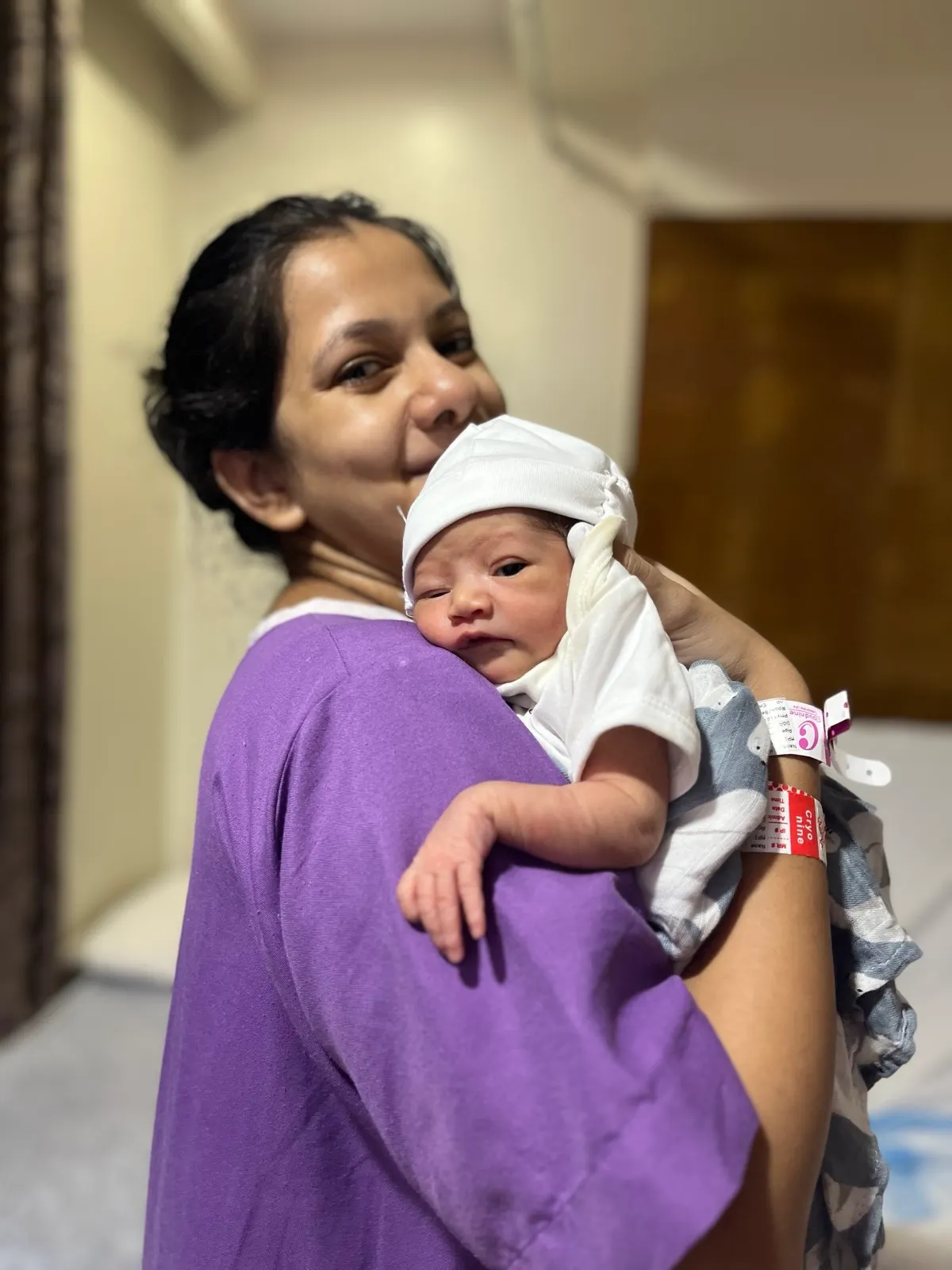
Experiencing pregnancy and nurturing a child within your womb is truly a precious journey. For all the pregnant women out there, one question often looms overhead: What will my delivery be like? Will it be a natural birth or a C-section? How intense will the pain be? My own delivery experience was exhilarating, and I’m excited to share the details of that unforgettable moment.
My estimated delivery date was 14th June,2024. I had decided to start my maternity leave from 3rd June,2024 as I thought my delivery would be after 38th weeks. During my pregnancy, I was identified with 2 issues- single umbilical artery and echogenic focus. Because of that my baby’s growth was less in last trimester and weight was less. So, my doctor had suggested to induce labor on 4th June when I was in my 38th week. On 26th and 27th May, I was having little sharp shooting pain in my lower abdomen. I thought of getting it checked on 28th May during my regular appointment. But on 28th May morning at 6 am my water broke. I was not having any pains. I was very calm. My mom was getting hyper, but I calmed her down. We packed all things and went to hospital around 7:30 am. There they checked my dilation, it was hardly 1 or 2 cm.I was very chill. I called up my friends and told that I came to hospital. I got admitted into hospital around 9 am. Till then I didn’t have any pain. Doctor suggested it would take another 6–7 hours to get fully dilated. At 9:30 am, doctor inserted some gel inside my vagina to induce labor pain. Doctor told she would check dilation after 3–4 hours. Around 10 am, I started getting labor pain and contractions. It was horrible. Initially I was able to tolerate but then I started shouting to tolerate the pain during contractions. At 11:30 am, I was begging to give me epidural as I was not able to tolerate the pain. Doctor came and told they can’t put epidural until dilation is 3 cm. Then in sometime doctor came and checked the dilation, it was 3 cm. They told they would take me to labor room and give epidural. Till the time they took me to the labor room, pain was unbearable. Before taking to labor room, nurses gave me enema, I had to pass motion in that unbearable pain. Nurse was removing my nail paint also as it is not allowed inside labour room. It was difficult stay still as contractions were unbearable and I was sweating like anything. I vomited also once during contractions. Around 12:15 pm finally they took me to the labor room. Anesthetic doctor started giving me epidural in my back. While she was injecting needle I had to stay still. Contractions were coming very frequently. After injecting epidural, doctor told me to lie down and told in 10 mins pain will go away. At that time, I felt doing urine like sensation. I told the same to doctor. She told it should not be and told one of the nurses to check the dilation. When nurse checked, I was fully dilated for 10 cm. Anesthetic doctor told that sometimes epidural works like magic and induces dilation. They told to wait and not push until all setup is ready. Nurses quickly started the setup and got me into position for delivery. By that time my pain had reduced, and I was calm and happy that in sometime my baby would be in my hands. They called my husband inside labor room, and I started pushing. Nurses were telling me to push when contractions were coming. Initially I pushed properly but after some time due to epidural effect I was not feeling many contractions. Nurses and my husband helped me a lot and my baby girl were born at 1:30 pm. I was super happy I was able to give birth via normal delivery and it’s a girl as I always wanted a girl.
Once delivery pain is over and you see your little one and hold them close to you, it feels like a magic. I couldn’t believe that me and my husband created this baby. Myself and my husband we both had tears in our eyes when we first saw her. The moment was beautiful
The Breastfeeding Story No One Tells You: When Latch, Milk, and Expectations Collide
The moment my baby girl arrived on May 28, 2024, was pure magic. I held her close, ready to embark on the beautiful breastfeeding journey I had envisioned — the ‘golden hour,’ the precious colostrum, the instant bond. Like many new mothers, I had attended workshops, read books, and felt prepared. I knew the theory. But what happens when reality doesn’t match the picture-perfect expectations? What happens when the milk doesn’t come, the latch is elusive, and you’re battling silent struggles while the world expects seamless motherhood?”
"What happens when the milk doesn’t come, the latch is elusive, and you’re battling silent struggles while the world expects seamless motherhood?"
This is my honest story, a raw and sometimes painful account of my breastfeeding journey. It’s about the joy, the tears, the guilt, the exhaustion, and ultimately, the acceptance that ‘fed is best.’ If you’ve ever felt like a failure, questioned your body, or navigated the complex world of infant feeding, then this story is for you.
My first attempt at that golden hour, however, was a stark introduction to a different reality. For me, there was no milk. My baby went without any nourishment entire day. Nurses emphasised skin-to-skin contact to encourage feeding, bringing her to my breast every two hours. By evening, with no milk appearing, the paediatrician recommended formula, setting a feeding schedule of every 2–3 hours.
While the nurses capably handled the formula feedings at the hospital, my own sleep was elusive. The sheer joy of having my baby kept me awake that entire day. I had hoped to recover with a full night’s sleep, but even with the nurses providing formula, I found myself waking every two hours. Whether it was the sounds of the ward, my baby’s cries, or simply a new maternal instinct, I was constantly alert. I’d often check on her, and if a nurse wasn’t already there, I’d call for assistance with her feeding.
I believe the first mistake during my three-day hospital stay was that the nurses directly fed formula to my baby at night and didn’t put her to my breast. During the day, they would try to help her latch. It was very difficult. I was already in pain, and my baby was so tiny; she would resist latching, cry, and still, no milk would come.
Once we left the hospital, it was scary. I suddenly realised I was a mom, and my motherhood journey had began. It was just me, my husband and my mom to take care of baby. Our feeding journey began on our own. We used to feed her using a spoon attached to a bottle. The next day, my mother-in-law also arrived. It took a lot of time to feed my baby with a spoon, and she would spill some milk while feeding.
Everyone — relatives and loved ones who were just a call away — suggested many things to try to increase my milk supply. Finally, on the fifth day, some drops came out. I was so hopeful that my baby would latch on and drink directly, but she wouldn’t latch and cried continuously. On the sixth day, I was determined to make her latch and told my mother-in-law and mom that I wouldn’t give her formula. She cried continuously when I tried to latch. My maid came and gently told me she was hungry and not to make her cry so much, so we gave her formula.
I would keep her on my breast for 40–50 minutes. Even then, she would immediately cry, and we’d have to give her formula. With spoon-feeding proving difficult, the idea of using a bottle nipple was brought up. When I fed her this way, she drank quickly and without spillage. The thought was that once she mastered sucking from the bottle, she would then be able to latch onto my breast.
After one week, we visited the hospital for my and the baby’s checkup. My gynaecologist advised me to see a lactation consultant (LC) for feeding issues. I was scared to visit her because on the second day, the LC had questioned why I gave formula, saying I shouldn’t have. We visited her again. She took a history and explained that my baby’s weight was only 2.3 kg, which made it difficult for her to suck effectively. She suggested I just put my baby on my breasts for 10 minutes before every feed, and then feed her either expressed milk or formula. At that moment, I felt bad for forcing my child to feed from my breasts.
Expressing milk, once it started to flow, was also a big challenge. Initially, we expressed milk by hand. My mom and my husband would help, but the physical toll was evident. My mom, who already suffered from spondylitis, began experiencing pain in her shoulder and hand from manually expressing milk from my breasts. Then we got a Philips manual breast pump. Pumping with it was also a big task. Getting up and pumping milk felt like a chore. I used to pump two or three times a day, which itself felt like a huge effort.
Around the third week, we took an online lactation consultation. I told her that my main concern was feeding for 30–40 minutes and my baby still not being full, crying until formula was given. The LC told me the latch wasn’t good, which is why she wasn’t getting enough milk, and that bottle feeding was causing nipple confusion. She suggested feeding via a katori (small bowl) and also advised pumping every 2–3 hours. At that time, feeding with a bottle every three hours and pumping three times a day felt like too much. I wasn’t getting enough sleep. Family members were tired of all the extra work. I felt depressed after listening to the LC’s suggestions.
My family members told me not to listen to her, to “let it go,” and just feed via bottle. They said if we fed via katori, she would spill everything. They gave examples of relatives and people whose babies didn’t drink from breasts, saying it was okay to give formula. I also talked with one of my friend. She told me she was feeding her daughter who was two months older than mine via bottle when not breastfeeding. I thought, “It’s okay to feed via bottle,” as everyone around me was comfortable with it.
Still, I kept trying to feed on my breasts. My family members suggested I get proper rest for a faster recovery. I used to sleep by 11 PM. My mom would take care of her until 2 AM. After that, my husband and I would feed her. During the 3 AM feedings, I used to put her to my breasts. I didn’t know that skipping the 11 PM and 1 AM direct breastfeeding sessions would affect my milk supply. For afternoon naps, my mother-in-law would take care of my child and her feedings.
"Having knowledge about what to expect after baby is very important. I feel if I had that I wouldn’t had suffered too much."
In the fourth week, we visited the lactation consultant again, as my baby was still not latching properly and would cry even after 45 minutes of breastfeeding. My baby had gained proper weight in three weeks, weighing 3 kg. The LC told me that since her weight gain was good, I could reduce or eliminate formula and start direct breastfeeding. She was showing me how to latch and how to hold the baby. While holding her, my hand was aching. She scolded me, asking if I wasn’t taking my calcium medicines. I wasn’t understanding how proper latching worked. I started crying there. I felt so helpless. I felt I couldn’t do this. No one prepared me for this; this is so difficult. The LC also told me that a baby would learn proper latching between four and six weeks, otherwise, they wouldn’t learn. It was the worst feeling.
"I felt so helpless. I felt I couldn’t do this. No one prepared me for this; this is so difficult."
When my baby was five weeks old, my mother, my baby, and I travelled to our hometown. My husband had to stay back. I decided I would eliminate formula and try to breastfeed directly. My Masi was there when I arrived home. She was supportive and would help me latch my baby to my breasts. I would feed my baby on my breasts, but I wouldn’t know whether she had drunk enough or if she was full. If she slept after direct breastfeeding, I would wonder, “What if she’s still hungry?” If she didn’t sleep after direct breastfeeding, it was often concluded that she was still hungry and my breast milk wasn’t enough, prompting the use of formula.
Mornings, I would feed her continuously for 2–3 hours. Then I would give expressed milk and formula. Evenings also, I would feed her continuously for 5–6 hours, and still, she would be hungry. She would sometimes cry uncontrollably while latching on my breasts. She would only be satisfied and happy when formula was given. But when I skipped formula, she would become fussy. No matter how hard I tried, direct breastfeeding was not working.
I watched a lot of videos on breastfeeding and talked to fellow mommies. One lady told me she had weaned off formula and bottle feeding by 3.5 months. I got my hopes up, thinking, “Okay, I have time. Don’t stress too much.” My friend told me to sit continuously for feeding, even every half hour. She would feed her baby the whole night. While I admired her dedication, I knew I couldn’t manage that myself.
During the day, concerns were sometimes raised that the baby wasn’t happy or full after direct breastfeeding, leading to formula being offered. Because of this, I often found myself concentrating my direct breastfeeding attempts at night. One day, at 3:30 AM, she woke up. I breastfed her until 4:30 AM, then she slept. She woke up again at 5 AM. I breastfed her again until 6 AM. At 6:30 AM, she woke up crying uncontrollably and wouldn’t even take my breasts. I had to give her formula, and only then was she satisfied. I was crying and called my husband because it was difficult to stay awake all night. He suggested feeding formula at night and trying breastfeeding only during the day.
Two months had passed, and I was still trying the same things — attempting to skip formula or expressed milk and breastfeed directly. One mom suggested increasing milk supply by expressing more. A twin mom I knew was expressing milk ten times a day to mimic direct breastfeeding via pumping. For me, it was difficult to express milk even three times a day. Another mom suggested breastfeeding during day and giving expressed milk via a bottle for night feedings, as both baby and mom would get good sleep.
One of my friends suggested feeding for half an hour on the breast and then giving ‘top-up’ milk (expressed or formula via bottle). She advised repeating this every two hours, explaining that if I followed this, the top-up milk would decrease, and I could transition to direct breastfeeding. I brought up a different suggestion I’d heard — that one should sit and breastfeed continuously. She disagreed, saying that was difficult and that feeding every two hours would be more effective. I created a timetable for feeding and was following that.
Around three months, she was feeding properly from my breasts, but I still wasn’t confident enough to let go of bottle feeding entirely. She seemed fully satisfied only after bottle feeding. We went for her 2.5-month vaccination. At that time, we noticed that her weight gain wasn’t enough. The doctor told us to feed more often and more quantity. I felt very bad then for not giving enough formula. My husband had also come by that time. He told me we would try to eliminate formula once she reached 5 kgs; until then, not to overthink anything else.
So, our focus became feeding her properly every two hours, whether it was formula or expressed milk. Around 3.5 months, things suddenly changed. She started getting distracted while feeding. She wouldn’t take the morning breastfeeds, which used to last 2–3 hours. She would be more interested in playing. Feeding via bottle also became difficult. She wouldn’t even take the bottle feed. My mom would also try to bottle feed her. Bottle feeding had become genuinely challenging. After some days, we figured it out: we would feed her in her sleep. There was no fixed routine, but usually, her wake window was 2–3 hours. We would put her to sleep and then bottle feed her. Also, if we knew she was about to wake up, we would bottle feed her then.
I didn’t give up on breastfeeding at that time either. She had started breastfeeding in her sleep. I would breastfeed her for almost 45 minutes, but even then, if she didn’t feel satisfied, I would give her a bottle, either expressed milk or formula. I used to feed at night as well. I thought I’d increase my milk supply first, then completely shift to breastfeeding. I started expressing more, from three times a day to 4–5 times a day. I got a hands-free pump. I used to wear it and roam around. Initially, it was good, but sometimes it was painful. Also, sometimes more milk would come, and sometimes less. I felt my Luvlap pump was superior. Its design allowed me to hold it properly and even express milk while lying down, which was a huge relief.
After four months, my daughter started becoming cranky when put near my breasts. I remembered a conversation with a fellow mom who had successfully shifted to exclusive breastfeeding around her baby’s 3.5-month mark. Reflecting on it now, I thought, ‘How is that possible for me?’ I had tried everything, and my daughter was now clearly understanding the difference between bottle feeding and breastfeeding.
Having spent the first four months at my mother’s place, we then moved to my husband’s family home. I kept trying breastfeeding. Sometimes she would cry, and sometimes she would take it. I tried expressing 5–6 times a day. Out of 7–8 feedings, I would give 5–6 expressed milk feedings and 1–2 formula feedings. Ultimately, I was content that she was consuming my milk, even if direct breastfeeding wasn’t always possible.
When my baby was 4.5 months old, I had a get-together with friends. We booked an Airbnb for 2–3 days, dedicating our time to our babies, all of whom were similar in age. It was striking that everyone else was breastfeeding directly. One friend, in particular, had such a plentiful milk supply that she had to express to avoid engorgement, and she even shared some with my baby. While the experience was good, I couldn’t help but feel sad that I wasn’t able to breastfeed directly like the others.
During the fifth month, my baby would take my breasts while in sleep, but sometimes she would cry a lot. One of the mommies from a WhatsApp group suggested trying a nipple shield while breastfeeding. I thought, “Let’s give this a try too,” as I still didn’t want to give up on breastfeeding. I ordered it and tried it, but even with the nipple shield, my daughter wouldn’t take my breast.
After five months, the frequency of breastfeeding slowly reduced from 6–7 times to 2–3 times. Even then, sometimes she wouldn’t take it. I realized it was time to let go. When I shared my struggles in a WhatsApp group, some moms reassured me that it was okay and that it hadn’t worked for them either, which helped me accept the situation. I continued expressing milk as much as I could, and around 5.5 months, we started her solids as per the doctor’s advice
As my baby neared six months, direct breastfeeding completely stopped. My pumped milk supply also continued to dwindle, eventually dropping to barely 20ml per session after seven months. This was the quiet end to a very hard time, and in that quiet, I found a surprising calm. I had tried so hard, done everything I could, and finally learned to let go of all the ‘rules’ that made me feel bad.
Today, my little girl is healthy and full of life, showing that love and food matter most, no matter how she got them. She’s happy and growing well. While a small part of me will always wish for that ‘perfect’ breastfeeding time, I’ve learned from this journey that it taught me strength, kindness to myself, and the clear truth that ‘fed is best.’ To all the moms out there facing similar struggles: what you do matters, your love is plenty, and your baby is so lucky to have you. I hope my story gives you a moment of understanding, a feeling of not being alone, and maybe a little peace on your own special path. Perhaps these lessons will be invaluable for any of you reading this who are on your own unique journey
"Today, my little girl is healthy and full of life, showing that love and food matter most, no matter how she got them."