
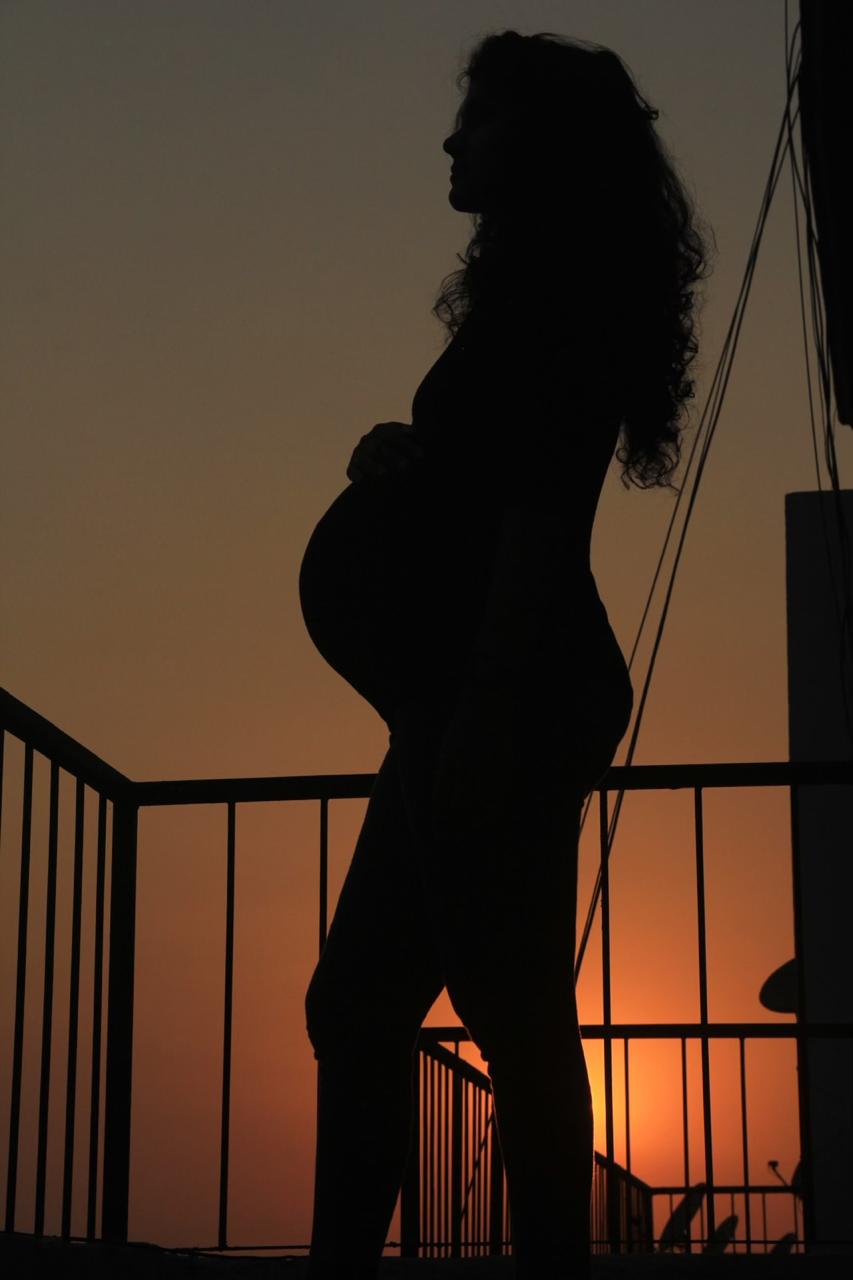
Vaginal Birth · Mumbai
I Trusted My Doctor. I Just Didn't Know What I Was Trusting Her With.
Vinita Sivaramakrishnan
I conceived my first baby when Covid had just made itself comfortable in our lives. We lived in Mumbai at the time and I consulted a gynaecologist closest to me who had great Practo reviews. I went to her and she gave me so much reassurance right from the first interaction. Being my first pregnancy, I thought the most important thing was to go with my gut — and it felt like the right decision. Everything around the pregnancy itself was very uneventful, just the way doctors like it. The only stressful moment I had was when I was about six months pregnant and suddenly started bleeding. We got some tests done, and eventually everything was all right.
From my second trimester, I also started prenatal yoga. Everything was virtual, and I found a friend through those sessions who shared the entire first pregnancy journey with me — and for that I will always be grateful. She was due around the same time as me, so it was convenient to exchange notes, discuss how we felt and what our doctors were saying. In hindsight, the entire experience would have been so isolating otherwise, and I am so glad I had her with me.
My due date was the 29th of March 2021. All through my pregnancy, whenever I'd ask my doctor what to expect during birth or how I could prepare better, she'd brush it aside: "Arrey Vinita, you have such broad hips — of course you will have a normal delivery. Don't think about it so much in advance. We'll figure it out when the time comes." And I obeyed.
While attending a prenatal yoga session on the 19th of March, I had some mild abdominal pain — something I hadn't experienced before. I reached out to my doctor, who asked me to come and see her the next day. On the morning of the 20th, without telling me much about what was happening, she did an internal check — which was painful — and told me I should expect to deliver in the next 24 hours. Little did I know that what she had performed was a membrane sweep. I only realised this much, much later, after my baby was born.
That evening, as an India–England T20I game played on TV, my lower back began hurting. I knew this was it. We reached out to my doctor, who told me to have dinner and see her in a couple of hours. I hardly had any appetite, even though some great Chinese food had been ordered in. Soon after, I went to meet my doctor along with my husband and my sister, and she told me to start timing my contractions. She also called the hospital where I'd deliver and let them know I'd need a bed later that night.
The rest of the time at home is fairly blurry. I just remember going in for a shower and feeling tremendous relief. I didn't realise how intense labour pain would be — it really knocked something out of me that felt almost like I was breaking. I kept my doctor updated on my contractions and reached the hospital around midnight on the 21st of March.
As soon as I got there, they got me on the bed and attached me to drips. The contractions were so intense. I couldn't just lie there in pain. The doctor on duty came and said, "This is how it is for everyone. We will increase the painkiller drips." The drips did nothing for me. I felt nauseated and vomited. I just remember thinking: this feels absolutely awful, and I can't believe this is what so many women go through. I kept drifting in and out of short naps of a few minutes. My husband was with me, but I wasn't even sure how to make him helpful in the situation.
At some point, someone came in and performed a perineal shave. At some other point, someone came and broke my waters manually. Someone administered an enema. I didn't know what was happening — and I just let go, because I had no idea when control had passed from me to so many others managing my body.
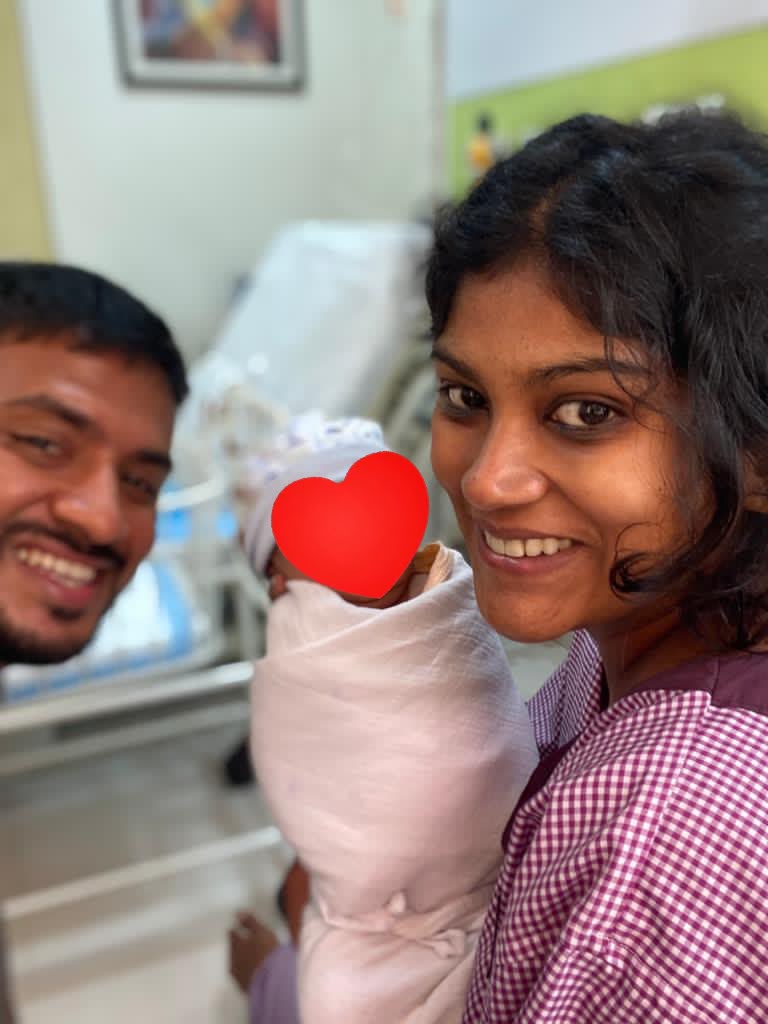
At around 5 AM, my doctor came in and told me I was about three hours away from delivering. At around 6:30 AM, I was wheeled into the delivery room. My husband was not allowed inside. There were so many people in there. I just remember wondering how I was going to be at my most vulnerable in front of so many strangers. I remember one lady who spoke to me in Tamil, my native language, and told me I'd be okay. She wiped my head with a cold towel — and then calmly told me her shift was over and she'd be leaving. What surprised me most was that there were men in the delivery room. Not doctors — just helpers. I brushed all of that aside and focused on my contractions.
My doctor kept telling me to push — the exact opposite of what I would be told during my second birth. When the time came, she said, "I'm just going to do a small cut, you won't even feel it" — and performed a routine episiotomy. She said I wasn't pushing hard enough and used a vacuum to finally get my baby out.
Baby boy, she said.
I was elated. Elated that my baby was here. Elated that I didn't have to go through labour pain any more. My baby didn't cry immediately, which worried me — but I was told he was okay. They brought him to me and he was cute as anything. As my doctor stitched me up, I was just so out of this world looking at that little face. I was told he had an extra finger, a genetic trait from my husband's side of the family, and that his breathing was slightly off. They took him to the NICU for the first couple of hours. There was no skin-to-skin.
I was in the recovery room for about an hour — no contact with my husband, not even knowing whether he knew our baby had been born. As it turned out, the guard outside had been giving him updates. He did know, and he had briefly seen Viaan too.
For far too long after that birth, I felt that this hadn't felt like a birth of my choice. My baby was fine. I was fine. But the birth itself had not felt like it was in my control — at all. And I genuinely vowed that if I were to do this again, it would not be like this. Little did I know that I would go on to empower myself so much for my second birth that it would change the trajectory of my life.
I want women to know better. I want women to feel better. I want women to realise what is okay and what is not okay — and to choose better. That is why I chose to birth differently the second time. And that is why I also gave birth to Project Born in India.