C-Section · Bengaluru
A Thousand People for the Baby
Krupa
PREGNANCY | May 2020 – January 2021
When I conceived twins in May 2020, I honestly didn't know whether I was supposed to jump for joy or be a little scared. Of course there was happiness, but somewhere in my head was the thought: Are we really signing up for this for a lifetime? Not that we would have done anything differently, but the scale of it felt enormous. At 33, with an apparently very low egg count, my first doctor considered it a “precious pregnancy” and directly recommended a C-section, so there wasn't really much room for discussion. The pregnancy itself was surprisingly smooth physically. The bigger challenge was COVID: no house help, parents away, cooking becoming difficult, and even getting groceries turning into an ordeal. In November, I moved closer to my mother and changed doctors. The new doctor gave me the option of natural delivery versus C-section, but by then I had already made up my mind. My brother, who is a doctor, had one important piece of advice: do everything possible to keep the pregnancy beyond 28 weeks because premature twins and NICU stays can be incredibly difficult for parents. So I counted the weeks, and everything seemed to be going beautifully—until January 19, at 35 weeks, when my water broke.
"Strong mothers raise strong sons and daughters, but strong mothers also need somebody to look after them."
DELIVERY | January 19–26, 2021
My husband was in a meeting, my parents had, of all days, gone to Mangalore, and my brother was at the hospital. We headed to emergency, where the nurse initially couldn't find the babies' heartbeat until the doctor realised the Doppler hadn't been positioned properly. Thankfully, the babies were fine. Then everything moved quickly: a rapid COVID test, Tuesday afternoon, and, because apparently childbirth needed one more complication, Rahu kala. My husband wasn't allowed inside the OT. At 2:54 p.m., with just a 55-second gap, my boys were born. Both went into the NICU because they were born at 35 weeks; for twins, 37 weeks is considered full term. One came to the ward on January 21 and the other on January 24. I was recovering from a C-section while constantly walking between the ward and NICU—walk, try feeding, come back, repeat. The irony was that walking helps C-section recovery, but walking is exactly what hurts after a C-section. And through all of this, I had been absolutely convinced that breastfeeding would be completely natural and effortless. I didn't even know what formula was.
"New mother needs more care than one might assume. Not just physical assistance but mental, emotional and physiological help. Not just during pregnancy but for a good amount of time post pregnancy!"
POSTPARTUM | The First 3–4 Months
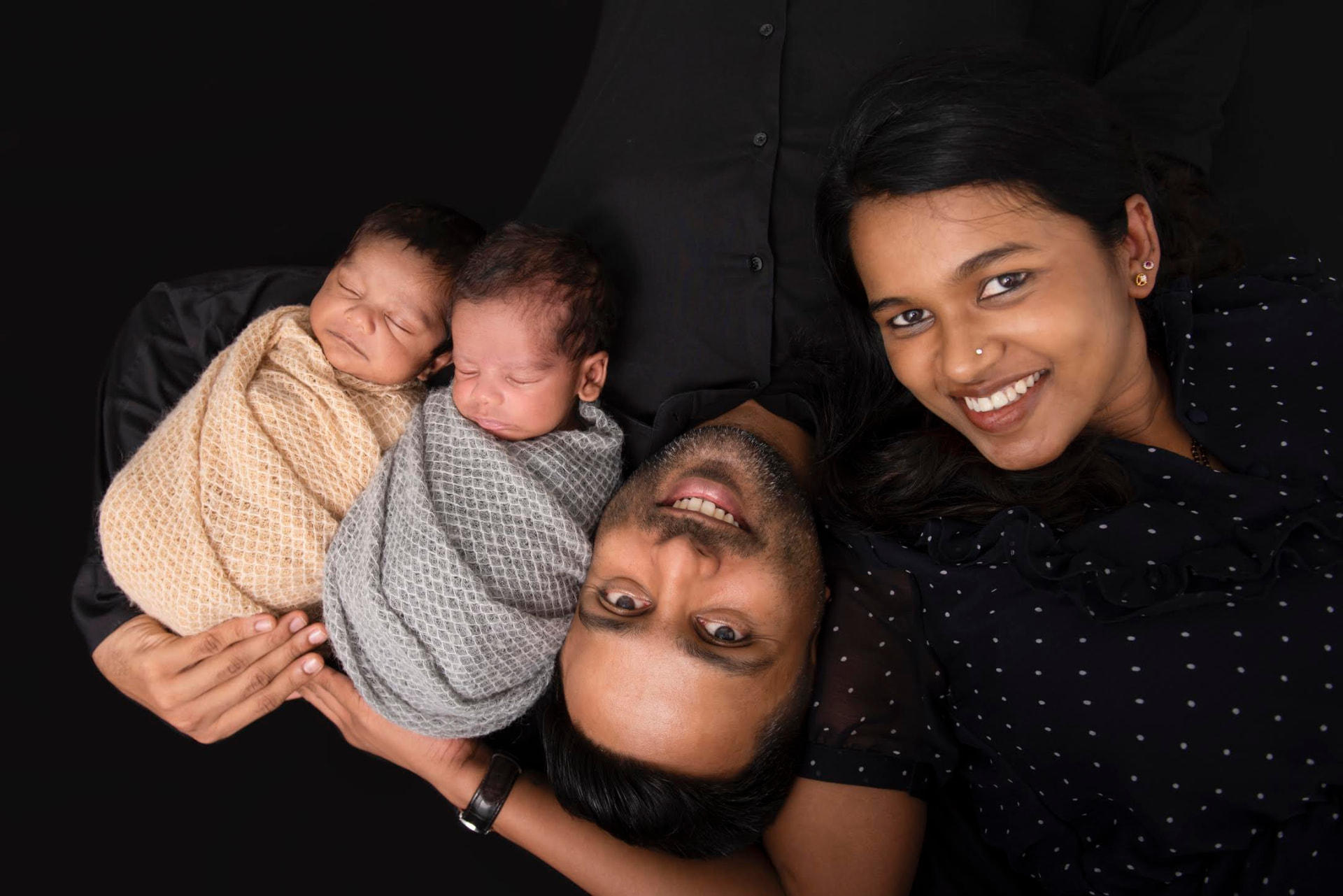
Reality had other plans. What I imagined would be a smooth, organic breastfeeding journey became one of the most difficult phases of my life. The hospital had told me not to use bottles and to feed the babies using a paladai—an olale in Kannada. From January 26, when the boys came home, I either breastfed or struggled with formula through the paladai. I hadn't mastered it, the babies weren't getting enough, and they would cry. Meanwhile, I had a friend with twins who was comfortably pumping and bottle-feeding, which made me wonder why I was making life so difficult. Eventually, we started using bottles. And after the first day, I smiled. My father was the first person to notice that I had smiled after what felt like an eternity. For three or four months, I barely remember genuinely smiling, except perhaps during photo shoots—because when you have babies and a camera appears, you somehow manage to smile. I was pumping, refrigerating breast milk, thawing it later, supplementing with formula and meticulously recording everything in a diary, while constantly being made to feel that I wasn't doing enough. I was told I wasn't breastfeeding enough, wasn't feeding my children properly, wasn't keeping them healthy, and that they were thinner because of me. Much of this came from my own family, especially my mother—not out of malice, but because she simply didn't know that expressing, refrigerating, thawing and later feeding breast milk was an accepted process. The result was a vicious cycle: stress because I wasn't breastfeeding enough, stress making breastfeeding harder, and then even more stress. Postpartum depression is real, and for me it seemed to arrive without a neat or obvious reason.
"There are a thousand people asking whether the baby has fed, slept, burped and gained weight, but far fewer asking the mother, “How are you feeling?”"
WHAT I WISH WE TALKED ABOUT MORE
Looking back, my biggest lesson is that postpartum care cannot be only about the baby. There are a thousand people asking whether the baby has fed, slept, burped and gained weight, but far fewer asking the mother, “How are you feeling?” A new mother needs someone to ask, “What can I do for you? Can I hold the baby for ten minutes so you can breathe? Can I let you eat in peace? Do you want to talk?” Breastfeeding may be smooth, or it may be incredibly difficult. A mother may breastfeed exclusively, pump, supplement with formula or use a bottle. The goal should be a healthy baby and a healthy mother—not using the method of feeding as a measure of whether someone is a good mother. Hospitals should prepare mothers for the physical and emotional realities of postpartum life, including breastfeeding difficulties and postpartum depression. Mental-health screening, supportive conversations, basic breathing or pranayama, and practical help should become part of routine postpartum care, with doctors, nurses and midwives trained to check on the mother as deliberately as they check on the baby. There are already a thousand people for the baby; the new mother needs her share of care too—perhaps even a little more. Strong mothers raise strong sons and daughters, but strong mothers also need somebody to look after them.
"The goal should be a healthy baby and a healthy mother—not using the method of feeding as a measure of whether someone is a good mother."